.svg)

Runtime Security for AI Applications and Agents
Secure every AI interaction your team builds and deploys: from prompts to outputs to agent actions. Inline enforcement without retraining models or rewriting prompts.


AI systems behave differently and introduce new security gaps
Security built for how AI actually works
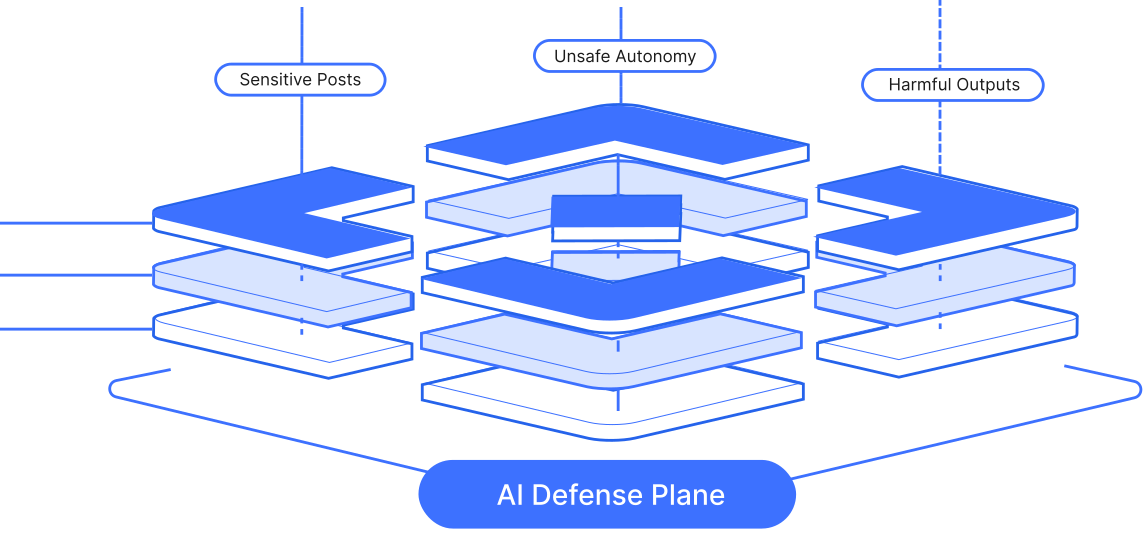
AI Agent Security enforces security on every AI interaction your organization runs by inspecting what goes in, controlling what comes out, and governing what your agents do. It deploys in minutes, requires no changes to your models or prompts, and adds no meaningful latency to user experience.
Security built for how AI actually works
AI systems behave probabilistically, act autonomously, and communicate in natural language. Securing them requires controls designed specifically for those properties

How AI Agent Security works
What AI Agent Security protects against

Adversarial attacks
Prompt injection, jailbreaks, and adversarial instructions blocked before they reach the model.

Data and access risks
Sensitive data exposure in prompts and responses, unauthorized agent access, and gaps in AI interaction visibility.

Safety and policy violations
Harmful or non-compliant outputs, unsafe or unauthorized agent actions, and misuse beyond defined policies.
Discover and Govern Your AI Agents
Before you can secure AI agents, you need to understand where they exist and what they can access.
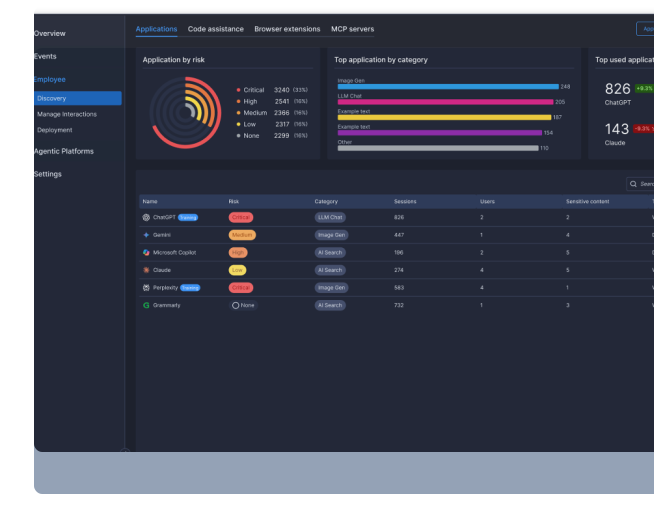
AI Agent Security provides visibility into agent usage and MCP-connected systems across your environment, including agents your teams did not explicitly build or register.
Where AI Agent Security Fits
MCP-connected systems
Blocks indirect injection through connected tools before agents act on compromised instructions
Applications
Identify safety and security failure modes before AI features and copilots reach production.
Agents
Contain unsafe actions, tool abuse, andconnected system risk at runtime.